
When you think of the most spine-chilling cinematic experiences in world cinema, japanese horror movies immediately come to mind as the absolute pinnacle of atmospheric and psychological dread. Unlike Western slashers that rely on immediate jumps and visceral blood splatters, East Asian horror operates on a deeper level of existential panic, leaving a lingering stain on your subconscious.
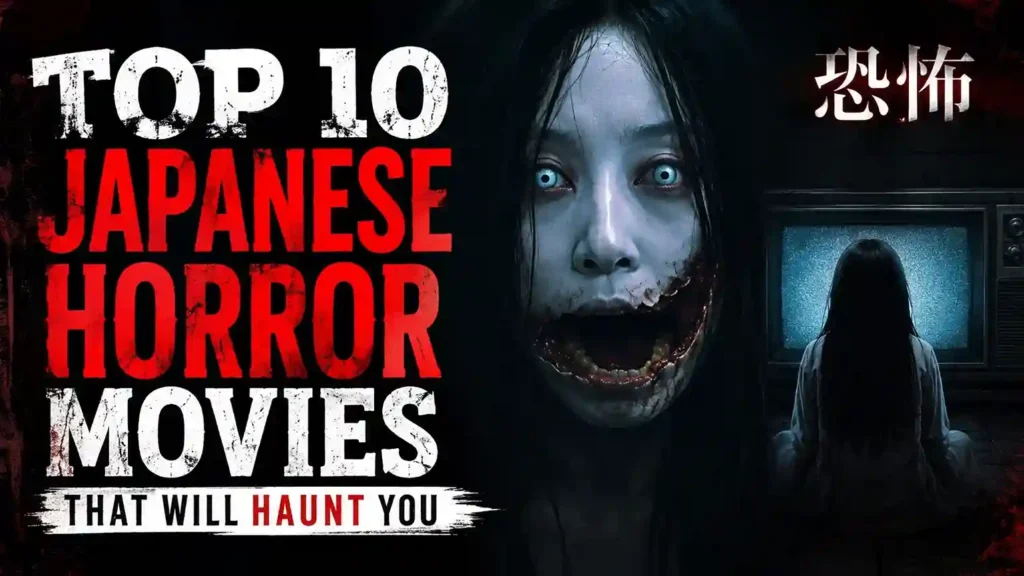
It is a style of filmmaking where the terror does not end when the monster leaves the screen; instead, the physical world around you—your silent television, your smartphone, or a leaky ceiling—becomes a direct extension of the nightmare. To help you navigate these terrifying realms, I have compiled a quick reference table of the top japanese horror movies below:
Quick Reference for Top Japanese Horror Movies
| Film Title | Release Year | Key Director | Subgenre / Core Motif | My Rating / Expectation | Primary Streaming Platform (2026) |
|---|---|---|---|---|---|
| Noroi: The Curse | 2005 | Kōji Shiraishi | Found-Footage / Demon Ritual | 10 / 10 (Peak Dread) | Shudder, Prime Video |
| Ju-On: The Grudge | 2002 | Takashi Shimizu | Supernatural Curse / Onryō | 9.5 / 10 (Terrifying) | Prime Video |
| Ringu | 1998 | Hideo Nakata | Techno-Paranoia / Onryō | 9.5 / 10 (Iconic) | Shudder, Tubi |
| Cure | 1997 | Kiyoshi Kurosawa | Crime Thriller / Hypnosis | 10 / 10 (Masterpiece) | Criterion Channel |
| Pulse (Kairo) | 2001 | Kiyoshi Kurosawa | Techno-Paranoia / Solitude | 9.0 / 10 (Devastating) | Tubi, Prime Video |
| Audition | 1999 | Takashi Miike | Psychological / Slasher | 9.0 / 10 (Shocking) | Shudder, Tubi |
| Dark Water | 2002 | Hideo Nakata | Supernatural / Maternal Grief | 8.5 / 10 (Melancholic) | Tubi, AMC+ |
| Onibaba | 1964 | Kaneto Shindo | Historical / Mask Folklore | 8.8 / 10 (Visceral) | Max, Criterion Channel |
| Kuroneko | 1968 | Kaneto Shindo | Folklore / Vengeful Spirits | 8.5 / 10 (Poetic) | Criterion Channel, Max |
| House (Hausu) | 1977 | Nobuhiko Obayashi | Surrealist / Avant-Garde | 8.0 / 10 (Fever Dream) | Max, Criterion Channel |
This is what separates classic japanese horror movies from their Western counterparts. Instead of offering a comforting resolution where the evil is safely locked away or blown up, these stories drag you into an endless cycle of cursed spaces, unresolved traumas, and inescapable entities.
The Cultural Roots of Terror in Japanese Horror Movies
To truly comprehend why these stories strike such a deep chord, one must look closely at the ancient folklore and theatrical traditions that form the foundation of japanese horror movies. The terrifying phantoms that populate these films are not mere Hollywood ghosts; they are onryō, vengeful spirits from Shinto and Buddhist mythology who were deeply wronged in life and returned to exact cosmic vengeance on the living world.
The archetypal onryō finds its origins in historical legends dating back to the eighth century. One of the most famous is the tale of Yotsuya Kaidan, which dates to 1825 and centers around Oiwa, a woman permanently disfigured by her husband Iemon’s poisoned makeup. Her tragedy and subsequent return as a wrathful specter set the standard for Japanese ghost stories.
Another foundational myth is Banchō Sarayashiki, the story of Okiku, a serving girl thrown down a well at Himeji Castle after being falsely accused of breaking an expensive plate. Her spirit emerges from the dark depths, counting the plates repeatedly, shrieking in agony upon reaching the missing ninth. This iconic imagery of the wet, weeping spirit crawling from a deep well served as the visual blueprint for modern japanese horror movies.
During the Edo Period, classical Kabuki and Noh theater standardized this look, creating a visual shorthand that instantly communicates death and rage to an audience :
- The Shiro-Shōzoku: The stark white burial kimono worn by the ghost, representing a spirit frozen in transition between the living and dead realms.
- Unkempt Long Black Hair: Wild, loose hair that cascades over the face, a visual representation of chaotic madness and violent trauma.
- Oshiroi and Kumadori Makeup: A pale white foundation paired with deep blue shadows (aiguma) to represent the literal physical decay of the corpse.
The Top 10 Truly Terrifying Masterpieces
1. Noroi: The Curse (2005)
This found-footage masterpiece stands out as one of the most unique mockumentary-style japanese horror movies. Directed by Kōji Shiraishi, the film presents itself as the final, unedited documentary of a missing paranormal investigator who perished in a mysterious house fire.

- Cast: Jin Muraki, Rio Kanno, Tomono Kuga, Neon Ooba
- Director: Kōji Shiraishi
- Where to Watch: Shudder, AMC+, Prime Video
- Critic’s Consensus: A chilling, hyper-realistic slow-burn that builds a sprawling web of conspiracy and ritual terror.
My Personal Opinion: When I first sat down to watch Noroi 12 late at night, I expected another generic Blair Witch clone. What I got was a deeply distressing investigation that felt so realistic I found myself checking Japanese message boards to confirm the characters weren’t real people. The final ten minutes contain a sequence of raw, chaotic horror that will leave you physically shaking.
2. Ju-On: The Grudge (2002)
When introducing newcomers to the terrifying depths of East Asian cinema, this film is a core recommendation when introducing beginners to japanese horror movies. Takashi Shimizu directs this non-linear anthology of terror, focusing on a suburban Tokyo home contaminated by a curse born from a husband’s brutal, jealous murder of his wife Kayako and young son Toshio.

- Cast: Megumi Okina, Misaki Ito, Misa Uehara, Yui Ichikawa
- Director: Takashi Shimizu
- Where to Watch: Amazon Prime Video, Arrow Video
- Critic’s Consensus: An uncompromising, fragmented nightmare that strips away all sense of safety.
To my mind, Ju-On is the ultimate haunted house film because it completely rewrites the rules of the genre. In Western films, you are safe once you flee the house. Here, the house is merely the birthplace of a disease; once you enter, the curse infects you, following you to your workplace, your apartment, and even under your bedsheets.
3. Ringu (1998)
This legendary production remains the commercial peak of japanese horror movies worldwide. Directed by Hideo Nakata, the story focuses on a cursed videotape that sentences whoever watches it to a terrifying death in exactly seven days.

- Cast: Nanako Matsushima, Hiroyuki Sanada, Rikiya Ōtani, Miki Nakatani
- Director: Hideo Nakata
- Where to Watch: Shudder, Tubi, Retro Stream
- Critic’s Consensus: A masterful fusion of modern techno-paranoia with the ancient, wet terrors of the well.
Watching Ringu today is a nostalgic but deeply creepy experience. Even though VCRs are long obsolete, Nakata’s direction makes the quiet hum of static on a blank screen feel like a direct threat. The climax, where Sadako crawls out of the television set, remains one of the single most frightening things I have ever witnessed.
4. Cure (1997)
A psychological thriller of unmatched depth, this masterpiece succeeded in elevating the standard of psychological japanese horror movies to high-art status. Kiyoshi Kurosawa directing a weary detective who is investigating a series of bizarre murders where the perpetrators are found near the victims with no memory of their actions.
![Cure (1997) Original Trailer [FHD]](https://filmisnap.in/wp-content/plugins/wp-youtube-lyte/lyteCache.php?origThumbUrl=https%3A%2F%2Fi.ytimg.com%2Fvi%2FKr0LzE4VRkQ%2F0.jpg)
- Cast: Kōji Yakusho, Masato Hagiwara, Tsuyoshi Ujiki, Anna Nakagawa
- Director: Kiyoshi Kurosawa
- Where to Watch: Criterion Channel, Arrow Video
- Critic’s Consensus: A hypnotic, philosophical slow-burn that questions the very nature of human evil.
My Personal Opinion: Cure is my absolute favorite film on this list. It doesn’t rely on ghosts jumping out of closets; instead, the terror comes from Kunio Mamiya, a young man who uses simple water drips and lighter flames to strip away the moral sanity of everyone he speaks to. It makes you feel as though your own mind is being gently dismantled while you watch.
Also Read: Top 10 Best True Crime Movies on Netflix You Must Watch in 2026
5. Pulse (Kairo) (2001)
An apocalyptic nightmare of digital isolation, this film is widely considered one of the most bleakly atmospheric japanese horror movies ever made. The plot centers on young Tokyo residents who discover that spirits are using the early internet to invade the physical world as the afterlife overflows.

- Cast: Haruhiko Kato, Kumiko Aso, Koyuki, Kurume Arisaka
- Director: Kiyoshi Kurosawa
- Where to Watch: Tubi, Amazon Prime Video
- Critic’s Consensus: A deeply depressing, beautifully shot exploration of loneliness in the digital age.
In our current era of social media addiction, Pulse feels less like fiction and more like a terrifying prophecy. The scene where a young woman encounters a ghost in a sealed red-tape room—moving with an unnatural, lagging, stuttering gait—is a sequence that still gives me goosebumps every single time I watch it.
6. Audition (1999)
This film begins as a slow, quiet romantic drama before devolving into a shocking nightmare, making it a major outlier among traditional japanese horror movies. Takashi Miike directs this tale of a lonely widower who sets up a fake movie audition to find a submissive new wife.

- Cast: Ryo Ishibashi, Eihi Shiina, Jun Kunimura, Miyuki Matsuda
- Director: Takashi Miike
- Where to Watch: Shudder, Tubi, Arrow Video
- Critic’s Consensus: A brilliant, slow-burn deconstruction of male entitlement that culminates in extreme body horror.
I will never forget recommending Audition to a friend who had no idea what lay ahead. For the first hour, you are lulled into a false sense of security by the dry, corporate romance. But when that giant burlap sack on the floor of Asami’s apartment suddenly moves, the trap snaps shut, leading to one of the most agonizing climaxes in film history.
7. Dark Water (2002)
Nakata focuses on the deep-seated anxieties of a single mother, highlighting the emotional depth often found in the best japanese horror movies. The film follows Yoshimi as she navigates a messy divorce and moves into a crumbling, damp apartment haunted by the spirit of a drowned girl.

- Cast: Hitomi Kuroki, Rio Kanno, Shingo Mitsumori, Mirei Oguchi
- Director: Hideo Nakata
- Where to Watch: Tubi, AMC+, Arrow Video
- Critic’s Consensus: A deeply moving, melancholic ghost story that derives its terror from maternal panic.
Dark Water is a film that makes you want to wrap yourself in a warm blanket while weeping. The constant, oppressive dripping of water from the ceiling and the damp, decaying concrete walls create a claustrophobic atmosphere that represents the crushing weight of depression and systemic neglect.
8. Onibaba (1964)
This primitive, highly physical nightmare succeeded in redefining how pre-modern historical eras are utilized in japanese horror movies. Kaneto Shindo directs this black-and-white masterpiece about two peasant women who murder wounded samurai in the tall grass to steal and sell their armor.
![Onibaba (1964) ORIGINAL TRAILER [HD 1080p]](https://filmisnap.in/wp-content/plugins/wp-youtube-lyte/lyteCache.php?origThumbUrl=https%3A%2F%2Fi.ytimg.com%2Fvi%2FvCPEJ982dxo%2F0.jpg)
- Cast: Nobuko Otowa, Jitsuko Yoshimura, Kei Satō, Jūkei Kaijiura
- Director: Kaneto Shindo
- Where to Watch: Max, Criterion Channel
- Critic’s Consensus: A primal, erotic, and deeply atmospheric study of survival and human depravity.
My Personal Opinion: The endless fields of swaying susuki grass in Onibaba act as a character of their own. Shindo’s use of sharp, high-contrast lighting transforms this natural landscape into a terrifying labyrinth where human beings lose their morality, reverting to beast-like desperation.
9. Kuroneko (1968)
This visually poetic tale of vengeance is a haunting historical masterpiece, proving that older, black-and-white japanese horror movies hold immense terrifying power. After being brutally murdered by rogue samurai, a mother and her daughter-in-law return as cat-like spirits who lure passing soldiers into a bamboo grove.

- Cast: Kichiemon Nakamura, Nobuko Otowa, Kiwako Taichi, Kei Satō
- Director: Kaneto Shindo
- Where to Watch: Criterion Channel, Max
- Critic’s Consensus: A gorgeously shot, folklore-rich ghost story that doubles as a sharp critique of feudal violence.
The physical choreography in Kuroneko is simply stunning. The ghosts glide through the air using theatrical wirework inspired by Noh theater, giving them an otherworldly elegance that makes their sudden, fanged lunges at their victims’ throats incredibly jarring and terrifying.
10. House (Hausu) (1977)
A colorful, psychedelic explosion of pure madness, this cult classic is by far the most avant-garde and surreal entry in the catalog of japanese horror movies. The story follows seven schoolgirls who visit a remote country house, only to find themselves systematically devoured by possessed household objects.
![HOUSE [Hausu] (Masters of Cinema) New & Exclusive Trailer](https://filmisnap.in/wp-content/plugins/wp-youtube-lyte/lyteCache.php?origThumbUrl=https%3A%2F%2Fi.ytimg.com%2Fvi%2F7-u8s49Lv28%2F0.jpg)
- Cast: Kimiko Ikegami, Miki Jinbo, Ai Matsubara, Kumiko Oba
- Director: Nobuhiko Obayashi
- Where to Watch: Max, Criterion Channel
- Critic’s Consensus: A gleefully chaotic, hyper-stylized fever dream of grand guignol absurdity.
House is a film I recommend to absolutely everyone, whether they like horror or not. From a piano that literally eats a girl’s fingers to a flying severed head that bites another girl on her rear, it is a glorious, surrealist masterpiece that could only have emerged from the brilliant mind of Obayashi.
The Evolutionary Arc of Japanese Horror Movies
The historical development of japanese horror movies is a fascinating mirror of the nation’s changing relationship with modernization and collective trauma. In the decades following the Second World War, filmmakers utilized the medium to process the lingering horror of atomic warfare, national grief, and rapid industrialization. Landmark historical films like Onibaba (1964) and Kuroneko (1968) bypassed the supernatural to locate horror within the desperate, primitive struggles of a war-torn peasantry. Even Ishiro Honda’s original Godzilla (1954) was less of a simple monster film and more of a mourning song for a country scarred by nuclear fallout.
This historical palette was further shaped by international conflicts and imperial expansions. Japan’s 1895 military defeat of the Qing Dynasty and subsequent occupation of Taiwan introduced local storytellers to foreign folklore, such as the Taiwanese legend of Chen Shou Niang—a murdered wife who returns to haunt her killers.
By the late 1990s, however, the threat shifted from historical war to urban and technological isolation. As computers, cellular networks, and high-rise concrete apartments began to disconnect people, a new subgenre emerged. The spirits were no longer confined to isolated wells or rural bamboo groves; they began to travel through cellular frequencies and digital monitors. Merging ancient folk legends with the cold alienation of the modern city, this period defined the golden era of japanese horror.
How Sound Design and Silence Shape Japanese Horror
The auditory architecture of classic japanese horror is where the physical reality of terror is truly constructed. Unlike modern Western films that rely on massive orchestral swells to startle the audience, sound design in scary scenes in japanese horror movies relies heavily on auditory void and structural silence to build tension. This artistic choice, analyzed in depth by musicologists, treats silence as a compositional tool rather than a simple lack of audio. It forces the human brain into a hyper-alert state, making the subsequent noises feel physically intimidating.
This process relies heavily on unique acoustic principles and creative recording techniques:
- Asynchronous Soundscapes: Composers often avoid syncing terrifying musical moments directly with visual jumps. For example, in Chakushin Ari (One Missed Call), composer Endo utilized different synthesizers to create a haunting, cheerful cell phone ringtone that signals the presence of the yūrei. This asynchronous sound operates independently of the visual cues, creating a persistent, nauseating sense of dread.
- The Evolutionary Visceral Response: In his biological studies on mammalian alarm communication, Dr. Dan Blumstein discovered that animals emit highly aroused “screams” when facing immediate danger. These screams feature rapid pitch variations and broadband, staticky “noise” created when the vocal system is overblown.
- Organic Sound Manipulation: J-horror sound designers utilize these exact evolutionary triggers. Kayako’s iconic death rattle in Ju-On or the distorted white static in Ringu mimic these overblown vocal screams, triggering an automatic, biological fight-or-flight response in our brains.
- Low-Frequency Drones: Advanced sound designers regularly embed imperceptible low-frequency drones (typically below 30Hz, often around 28Hz) into the ambient mix of certain scenes. These frequencies are felt rather than heard, causing physical sensations of anxiety, hyperventilation, and mild nausea in the viewer, proving that sound in japanese horror movies is a physical experience.
Where to Watch These Terrifying Japanese Horror Movies in 2026
Finding these classic japanese horror movies on modern streaming platforms can sometimes be a challenge, as licensing rights are constantly shifting across international territories. While major services like Max and Amazon Prime Video offer a reliable selection of both mid-century classics and popular Y2K hits, specialized platforms remain essential for dedicated fans.
For those looking to explore the deeper, more obscure corners of the subgenre, ad-supported networks like Tubi are a treasure trove. However, because Tubi does not offer regional filters for international cinema, discovering these gems often feels like a crapshoot without a curated guide.
Thankfully, boutique physical media labels like Arrow Video have stepped in, releasing beautifully restored Blu-Ray box sets that keep these terrifying masterpieces preserved and accessible for the next generation of film lovers.
Conclusion: Embarking on Your J-Horror Journey
The enduring legacy of these films lies in their ability to strip away our modern complacency, turning our everyday technology and personal isolation into sources of pure, inescapable dread. By drawing directly from ancient folklore and utilizing surgical precision in their sound design, Japanese directors have created a form of cinema that lingers in the mind long after the screen goes dark. If you are ready to dive deeper into the abyss, these ten japanese horror movies will ensure you never look at a dark corner—or a quiet room—the same way again.