
Over the last few years, a surprising trend has emerged in the sports world. Several famous actors, producers, and entertainment entrepreneurs have become celebrity football club owners, investing millions into clubs across England, Wales, the United States, Mexico, and beyond.
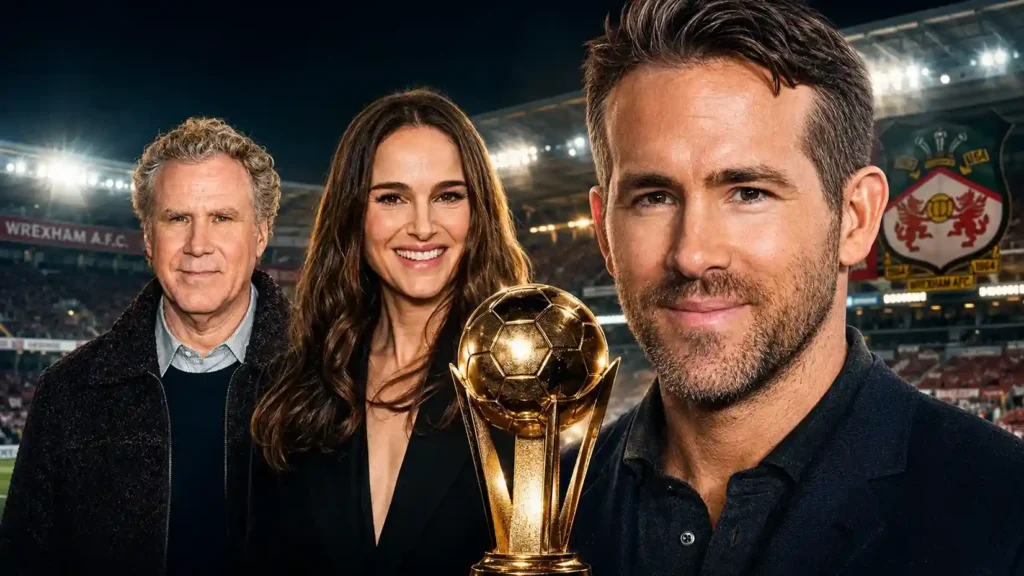
But this isn’t just another celebrity hobby. These stars are helping clubs attract global audiences, secure major sponsorships, launch documentaries, and dramatically increase their market value. In some cases, struggling teams have become worldwide brands almost overnight.
As someone who follows both entertainment and sports business closely, I find this one of the most fascinating trends in modern football. These celebrities aren’t simply posing with jerseys for social media photos—they’re helping reshape the business of football itself.
Why Are Hollywood Celebrities Buying Footbal’s Clubs?
Football is no longer just a sport. Today, football clubs are global media properties capable of generating revenue through:
- Broadcasting rights
- Merchandise sales
- Digital content
- Sponsorships
- Streaming platforms
- International fan communities
Celebrities understand something many traditional investors don’t. A football club isn’t merely a team. It’s a story, And stories are what Hollywood sells best.
The combination of football passion and entertainment expertise has created a completely new ownership model that’s changing the sports industry worldwide.
Celebrity Football Club Owners List:
1. Ryan Reynolds & Rob McElhenney – The Wrexham Revolution
If there is one celebrity football success story that changed the industry, it’s Wrexham AFC. When Ryan Reynolds and Rob McElhenney purchased the Welsh club in 2021, many football fans laughed at the idea.
Wrexham was playing outside England’s professional football leagues and had little international recognition. Fast forward a few years and everything changed.

How They Built a Global Brand
Instead of focusing solely on football, Reynolds and McElhenney focused on storytelling. Their documentary series, Welcome to Wrexham, introduced millions of viewers to the club’s history, supporters, and community.
Suddenly, fans from around the world cared about a club many had never heard of before.
The Results
- Massive growth in merchandise sales
- Global sponsorship opportunities
- Increased stadium attendance
- International media attention
- Multiple promotions
Wrexham became one of football’s biggest success stories.
What impresses me most is that they didn’t treat Wrexham as a marketing gimmick. They invested emotionally, financially, and strategically. Their model may become the blueprint for future celebrity owners.
2. Natalie Portman – Building a Football Club Like a Startup
Natalie Portman took a very different approach. Rather than purchasing an existing club, she helped launch Angel City FC in the United States.
The project was designed with modern business principles from day one.

What Made Angel City Unique?
The club was founded with:
- A female-led ownership group
- Broad investor participation
- Modern branding
- Strong community involvement
Instead of relying on traditional sports structures, Angel City operated more like a Silicon Valley startup.
The club quickly attracted major investors and became one of the most valuable women’s football organizations in the world. Its success proved that women’s football could generate enormous commercial value when supported by strong branding and professional management.
Why Fans Love It
Angel City isn’t just a football club. It’s become a symbol of innovation, inclusion, and the future of women’s sports.
3. Eva Longoria – The Storytelling Investor
Eva Longoria has quietly built one of the smartest sports investment portfolios in Hollywood. While many celebrities buy into one club, Longoria expanded across multiple teams and leagues.
Clubs Linked to Eva Longoria
- Internacional de Bogotá
- Club Necaxa
- Angel City FC
Longoria understands media. Instead of simply investing money, she uses entertainment to create awareness. Her involvement in football documentaries and club storytelling has helped increase visibility for the teams she supports.
Why This Matters
Modern football is becoming increasingly dependent on global audiences. The more people watch, follow, and engage with a club, the more valuable it becomes. Longoria’s approach directly supports that growth.
4. Will Ferrell – Bringing Hollywood Energy to Football
Will Ferrell may be known for comedy, but his sports investments are surprisingly strategic. Unlike celebrity owners who seek control, Ferrell prefers partnership.
Los Angeles FC
Before LAFC became one of Major League Soccer’s biggest brands, Ferrell joined the ownership group. His celebrity presence helped generate attention during the club’s early years.
Leeds United
Ferrero later expanded into English football through Leeds United. The investment connected an iconic English club with North American audiences and commercial opportunities.
The Bigger Picture
Ferrell’s strategy shows that celebrity ownership doesn’t always require running the club. Sometimes visibility alone can create enormous value.
5. Michael B. Jordan – Football Meets Global Branding
Michael B. Jordan entered football ownership through AFC Bournemouth. His role highlights a growing trend among celebrity investors. Instead of handling football operations, celebrities often focus on brand development.

What Jordan Brings
- International visibility
- Commercial partnerships
- Global fan engagement
- Marketing expertise
His influence helps Bournemouth reach audiences beyond traditional football circles.
Football clubs increasingly compete for attention worldwide. A globally recognized actor can help open doors that traditional sports executives cannot.
6. Reese Witherspoon – The Quiet Investor
Not every celebrity owner seeks headlines. Reese Witherspoon’s investment in Nashville SC reflects a more traditional business approach.

Her Investment Philosophy
- Business development
- Community relationships
- Long-term growth
This strategy attracts less media attention but often provides stability.
Football ownership doesn’t always require documentaries, viral content, or constant publicity. Sometimes smart investing is enough.
7. Mindy Kaling – A Lesson in Football Ownership
Mindy Kaling’s involvement with Swansea City demonstrates an important reality. Celebrity ownership alone cannot guarantee success.
What Happened?
Although her stake helped increase awareness, Swansea continued facing sporting and financial challenges. The club eventually underwent significant ownership changes.
Football remains a results-driven industry. Even the biggest celebrities cannot overcome poor management, weak recruitment, or structural issues. This is perhaps the most valuable lesson on this list.
How Celebrity Ownership Is Changing Football Forever
The traditional football ownership model is evolving. Today’s celebrity investors often follow a simple growth formula.
- Step 1: Acquire a Club: Usually one with growth potential.
- Step 2: Build Awareness: Through documentaries, social media, interviews, and entertainment content.
- Step 3: Expand the Fanbase: More fans create more revenue opportunities.
- Step 4: Attract Sponsors: Brands want access to larger audiences.
- Step 5: Reinvest in the Team: Better players improve performance.
- Step 6: Increase Club Value: Success on and off the field boosts valuation. This cycle has become one of the most powerful growth engines in modern sports.
Which Celebrity Football Owner Has Been Most Successful?
While every investor on this list has contributed something unique, Ryan Reynolds and Rob McElhenney stand out. Their transformation of Wrexham remains one of the most remarkable stories in modern football.
Ok Done
The idea of Hollywood stars owning football clubs once sounded like a publicity stunt. But today, it’s clear that these investments are much more than celebrity side projects.
From Ryan Reynolds helping transform Wrexham into a global phenomenon to Natalie Portman building one of the most valuable women’s football clubs in the world, these stars have shown that football ownership can be a powerful blend of business, storytelling, and passion. Some investments have delivered incredible success, while others have highlighted the challenges of running a professional football club. Yet one thing remains certain: the relationship between entertainment and football is stronger than ever.
As more celebrities look beyond movies and television, football clubs are becoming the next big stage for ambitious investors. And if current trends continue, we may soon see even more Hollywood icons entering the beautiful game.
What Do You Think?
If you could own a football club, which team would you choose and why?
And among the celebrities featured in this list, whose football ownership journey impressed you the most? Share your thoughts in the comments below and don’t forget to explore more exclusive celebrity, sports, and entertainment stories on FilmiSnap.
FAQ
Which Hollywood celebrity owns Wrexham AFC?
Ryan Reynolds and Rob McElhenney are the owners behind Wrexham AFC’s remarkable rise.
Does Natalie Portman own a football club?
Yes. Natalie Portman is a founding investor in Angel City FC.
Which Hollywood actor bought a football club?
Several Hollywood actors have invested in football clubs over the past few years. The most famous example is Ryan Reynolds, who, along with Rob McElhenney, purchased Wrexham AFC and helped transform it into a globally recognized football club. Other notable Hollywood figures involved in football ownership include Natalie Portman, Eva Longoria, Will Ferrell, Michael B. Jordan, and Reese Witherspoon. Their investments have helped bring new fans, sponsorships, and global attention to football clubs around the world.